

Category A1 Rules For Motorcyclists
The category a1 rules apply to those who wish to drive small motorcycles. These vehicles have a capacity of cylinders up to 35kW. They cannot be built from vehicles of more than twice their power.
The open category of drone operations can be divided into three subcategories A1 to A3. You can fly drones with the class C0 or C1 as part of the A1 subcategory (fly over people) until January 2024.
A1
Category A1 is the earliest of three drone categories controlled by EASA. It applies to aircraft up to the maximum takeoff mass (MTOM) that is 25 kilograms. prawo jazdy kategorii a1 requires a record of flight and a flight plan as well as an identification system for remote use, and a geoawareness. The drone must be within the constant view of the pilot. It is prohibited to fly over groups of people or in areas used for commercial, industrial or recreational purposes. The drone must remain less than 120 meters above the ground level.
If you wish to fly a drone that is not listed in the above-mentioned categories, you must get a special licence from the Civil Aviation Authority. This is referred to as an operational authorisation. You can find out more about how to apply for this here.
A1 applicants must have at least 16 years of experience in riding two-wheeled vehicles. They must also have completed the obligatory basic training and pass both a theory and practical test. They must also have a valid medical certification.
A1 license holders are allowed to ride two-wheeled mopeds so long as their cylinder capacity is no more than 125 cc and their power-to-weight ratio is not more than 0.1 kW/kg. They can also ride motorcycles with an optimum cylinder capacity of 125cc as well as trikes, quad bikes and quad-bikes.
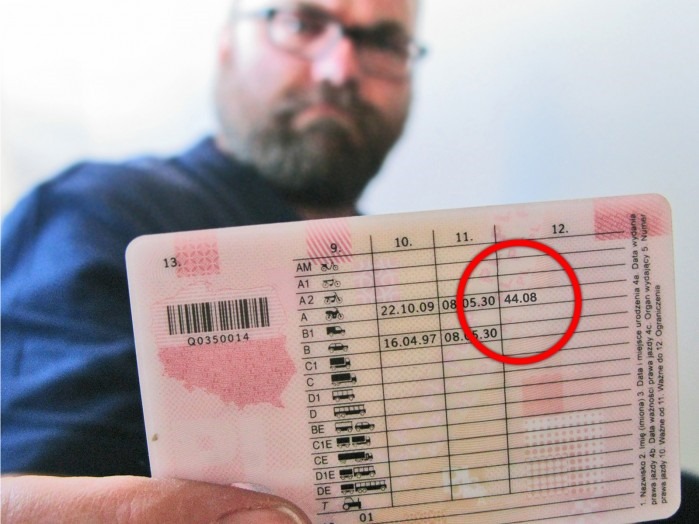
The category A1 driving licence is designed to provide easier access to the next vehicle category, which permits license holders to drive vehicles with a maximum mass of up to 35 kW. This is a reason to gain some experience driving vehicles with less power prior to moving on to higher licence categories.
Drones that are currently in use but do not have the CE mark are able to be operated under the subcategory "A1" until January 1st, 2024. They are safe and pose no significant threat to the general public. However, they must remain at a distance of 150 meters from structures or areas of industry, and also from recreational areas. They must also not fly over crowds, or within 5 km of airports or airfields.
A2
You could be eligible for an A1 license after you have completed your CBT and are looking to obtain an A1 motorcycle licence. This allows you drive an unrestricted motorcycle without a sidecar. It must have a cylinder capacity of up to 125cc, and a power output of up to 11 kW. The licence is only accessible to those who are 16 years of age. You can find out more about the different categories and their rules by looking up your driving licence information online.
You can also fly drones that have the maximum weight of 4kg in the A2 category However, they must be kept at a safe distance from people when taking off and landing. The drones must be at least 30m in horizontal distance from people when they are in low-speed mode or 5m if they are not involved. You also must pass the A2 Certificate of Competence (A2 CofC) exam to fly in this category.
If you're planning to fly larger drones, you'll have to apply for an operator's permit in the specific category. This requires you to complete the General VLOS Certificate training, the flight test, and then prepare an Operations Manual. The process for applying for a specific category permit is similar to the PfCO and you can learn more about the requirements by reading our comprehensive guide.
A2 also enables you to operate transitional drones that aren't yet CE certified, but have been modified to lessen the chance of collisions with humans. These drones will only be allowed to fly in A2 until end 2022. After this, they will have to comply with the A3 regulations.
The A1 and A2 categories are designed to aid you in becoming a safer and confident motorcyclist. The amount of lessons you will require depends on your skill and progress, but a predetermined number of special rides must be undertaken. This is a minimum of five lessons on country road as well as four on highways and three lessons at dawn or in darkness.
A3
This category permits drones with a an maximum takeoff mass of 25 kg. It is a less risky operation, however strict precautions must be taken to mitigate potential incidents. A distance of 150 meters is required between drones and residential, commercial industrial, recreational, and residential areas. This also requires drones to be fitted with a remote identification system and geoawareness systems.
The tier is also split into sub categories, A1, A2, or A3. The A1 subcategory allows flights that involve uninvolved people and is exclusively restricted to drones that have an identification label for Class C0 or C1. It requires an absolute distance of 30 metres from other drones when flying at a high altitude or 5 metres in slow flight mode.
Drones that have the Class Identification Label C2 may be operated under subcategory A2 if they meet the size requirements and the remote pilot has passed an additional knowledge test. This exam is designed to test the remote pilot's understanding of the technical and operational mitigations to reduce the dangers of flying larger drones (class C2, less than 4kg mass) close to people. Successful completion of this exam is rewarded with a 'certificate of competence to fly in category A2'.
Due to the limited supply of certified drones in this category There are transitional arrangements that permit non-certified 'legacy' drones to be operated in categories A1 and A2 for two years following the new EU regulations come into the market. Legacy drones are not permitted to be deliberately flown overhead of people and must be operated using an A2 CofC.
To operate a drone that falls under this category you must pass the normal online flyer ID test and then pass an additional theoretical test. Additionally, you must declare that you have gained some practical knowledge of your drone and then submit an official declaration of competency. These requirements are similar to the driving license model which means that drivers who first get their license for a vehicle in a lower category can then move up to the higher category.
A4
The DOH is preparing detailed guidelines for category A4. These guidelines will be consistent with other operations, and will include information such as the number of dressings that are changed each day. These guidelines will be presented to the Inter-Agency Task Force for the Management of Emerging Infections, (IATF-EID) as well as the DOH National Immunization Technical Advisory Group. When they are approved, the guidelines will be reviewed and approved by both the DOH National Immunization Technical Advisory Group and IATF-EID.
In this category, drones with a class identification label C0 and C1 are permitted to fly within a minimum distance of 50 metres of people who are not involved. This is a low-risk category however, strict security measures are required to reduce incidents. Drones classified as A1 or A2 are required to pass an additional theoretical knowledge test before they can operate in this subcategory.
This test is designed to test your understanding of the additional risks associated from flying drones in close proximity to people. The certificate of competence is issued upon the successful completion of this test. The pilot must maintain at least 30 metres from an non-involved person or 5 metres if flying in a slow flight mode.
If you're looking to obtain an motorcycle license you must pass some training sessions to take the test, and then pass the practical test. It is contingent on your age, abilities and learning progress. A minimum of 12 90-minute classes must be completed.
During these lessons you will learn about your vehicle and the traffic laws. You will also learn valuable tips regarding how to drive in difficult situations. In addition to the required lessons, you must attend a specified number of special rides.
The new category E brings together the classes A1 (retail) and A2 (financial services and professional services), B1 (offices) A4 (restaurants/cafes) and B5 and A5 for hot food takeaway. It also includes medical and health-related uses as well as creches and nurseries, as well as indoor recreation facilities. The new rules are expected to simplify the licensing process and cut costs. The landlords will now be able to make use of their properties in ways that they are not currently permitted.