

The Procedure For Obtaining a Driving License A1
The Compulsory Base Training (CBT) is the first step in obtaining an A1 driving license. The theory and practical tests must be completed.
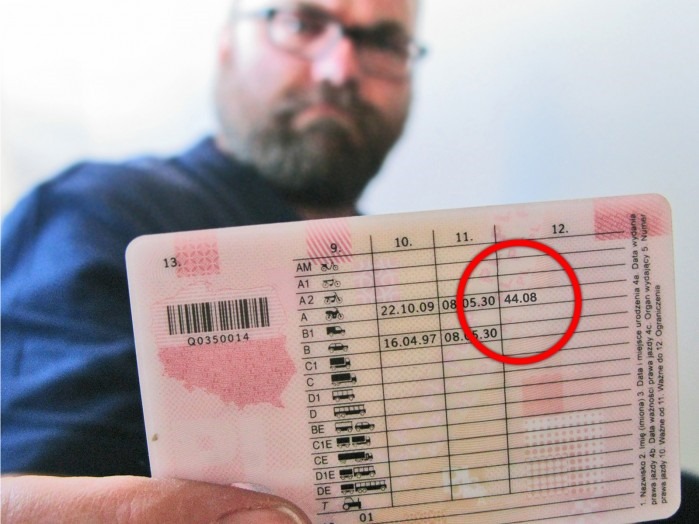
The A1 licence allows you to drive motorcycles up to 125cc. It is an important step to gain experience prior to moving on to the A2 licence.
Age restrictions
In the United States, age requirements for obtaining a driver's license differ by state. However, the majority of states require a new driver to have a permit for learning for a specific amount of time and have a clean driving history before they can take a road test and receive a full license. Some states also require parents or legal guardian to attend the test. If the driver is under the age of 18 years old, a parent must sign the application. Some states also require the driver who is new to bring documents like school records or proof of attending an education course for drivers to the test.
Depending on the state, some teens will need to take an advanced driver's education class to be able to get a restricted driver's license. Teens must also be free of tickets and accidents for a specific period of time to qualify for this restricted license. They also have to log at least a certain amount of hours of practice. In a lot of cases, this restriction will prohibit the teen from driving at night or with passengers under the age of.
Some states will allow a driver to upgrade to a provisional license, sometimes called a junior or intermediate license, once they have completed their test. These types of licenses permit young drivers to drive on their own without a parent or legal guardian, but they are subject to limitations like curfews and passenger limits.
To obtain a restricted license, a teen must attain the age of 16and take a driver education course and record 50 hours of driving practice. They must also consent to not transport any passengers younger than 21 unless those passengers are family members. Teens could also be required to not drive between midnight and 5 a.m. If a teenager wants to be able to avoid these restrictions, they must submit two statements that describe why they cannot comply with these requirements. These statements must be on official letterhead and signed by the legal guardian or parent and written on official stationery. In redirected here , this requirement can be waived if the teenager can show that these restrictions hinder their work, education, or travel between home and work.
Training requirements
In a number of US states, drivers must pass both writing and driving tests before they can get the license. These tests are designed to be based on the state's driver's manual and will contain safety information, traffic laws, and driving abilities. If you have a disability or need to take the test in the language of another, please contact the local department of motor vehicle to see what accommodations are possible. Some states provide free pre-licensing training to help you prepare for the written test.
It is best to speak with your school's designated official or campus advisor if you are a student at college. They can help you obtain an appropriate license for your location and provide information and assistance for the application. They can also refer you to the SEVP Response Center if you have any concerns about your eligibility to get a license.
Getting a driver's license requires significant preparation and practice. Based on where you live, you may need to attend driver's training or attend classes. In the United States you can find driving schools in your area by visiting the website of your local department of Motor Vehicles. You can then arrange an examination with the DMV. The road test will evaluate your ability to drive in a variety of situations such as changing lanes or backing up.
You'll need to satisfy the requirements of your training before you are able to take your road test. You may need to complete a driver education course or hours of supervised driving. Many states have rules for supervised driving which include requiring an instructor or a parent to be present with the driver. Some states also have restrictions regarding the times a driver can drive, for example, the requirement that an instructor be with the driver between 9 p.m between 5 and 9 a.m.
In the United States, there are three types of CDLs, each with a specific set of skills and regulations. There are three kinds of CDLs which include commercial passenger vehicles drivers of trucks, and drivers of buses. For each kind of CDL applicants must pass a driving test as well as a written examination. They must also undergo additional training. The process of applying for the CDL differs by state, so it's important to study the rules carefully before you submit your application.
Theory test
The driving theory test is the first step to becoming a driver. It looks at your understanding of the rules of the road. It consists of two parts. The multiple-choice section includes 50 questions on the Highway Code, and the Hazard perception section contains 14 clips that require you to be able to identify and respond quickly to hazards. Both sections are of one hour and thirty-five minutes long. It is important that you prepare as the best you can for the test and show up on time.
Before the test begins, you will be asked to review the rules for the test and present the photocard provisional licence. You will be taken to the test room where an administrator will check both parts of your license and assign you a computer for the test. You will be given a set of instructions and allowed to answer questions in a practice session prior to the test.
You will be notified about your test results once it has been completed. If you pass, you will receive an official certificate of completion, which is valid for a period of two years. If you fail, you'll receive feedback on where you went wrong and how to improve.
If you wish to appeal the results of your theory test, speak to the supervisor before leaving the test centre or fill out an appeal form. You will need to choose a time three working days before the test.
You can take your theory test as soon as you get your provisional license, but it is recommended to begin with driving lessons. This will help to give you confidence and an excellent foundation in the rules of the road. You can also take the theory test as often as you'd like as long as your provisional licence remains valid.
If you require an interpreter for your theory test You can request one. You must provide medical proof from a physician, or employer, on letterhead. You will find the list of approved signatories on the application form or contact 0818 606-106.
Practical test
The practical test is part two of the driving license process. The test tests your ability to drive safely and effectively in a variety of road conditions. It also tests your knowledge of the road rules. This test must be passed before you are able to move on to the next step. Some states require that you complete a pre-licensing, or supervised driving class prior to taking the test.
The exam includes an eyesight test and safety questions. The examiner may also ask you to describe the various features of your vehicle. You must be able to identify road hazards and understand their dangers or the safety. You should be able to use the emergency brake, and know how to change gears. You must be able park safely and switch lanes during the test. The examiner will provide directions throughout the test. The majority of examiners use tablets that record the test however it isn't required to use them.
Most provinces use a graduated driver licensing system. You must pass a driving test to advance to the next level of a license, which may be for a regular automobile or special vehicles such as buses or motorcycles. Certain countries have a separate testing system for heavy trucks, and is known as the class A CDL license. This requires a different test than the normal class B or C licenses.
It is important to prepare for the test, as it can be difficult to pass if you're not prepared. It is recommended to read the manual and practice driving. Online resources can also help you pass the test. It is also a great idea to bring someone along with you, for example a family member or friend, for the test. However, they shouldn't interfere with your driving or give instructions during the test.
The driving license is a document issued by the government that certifies the driver's identity, driving ability and knowledge of the road. It is a valid proof of identification when traveling internationally and is accepted by all US ports of entry, including land and sea borders. The license also includes basic details about the driver, such as the name of the driver as well as date of birth, address, vehicle types, emergency contact, fingerprint impression, blood group and driving picture.